
New DHS Rule May Pause Asylum Work Permits (EAD): What Las Vegas Families Should Know (2026)
If you’re an asylum seeker in Nevada, the words “new DHS rule” can feel like a punch to the stomach. In 2026, a proposed Department of Homeland Security change could reshape how long you must wait for an asylum work permit (EAD)—and it could even pause new asylum work permits under certain conditions. For families in Las Vegas, Henderson, and North Las Vegas, work authorization is not just paperwork. It’s rent, groceries, childcare, and the ability to rebuild your life with dignity.
This guide explains what the proposal says (in plain English), what is true right now, and a simple plan you can use to stay grounded while policies change.
Disclaimer (general information / not legal advice)
This article provides general information and is not legal advice. Immigration law is complex, and every case is unique. Reading this article does not create an attorney‑client relationship. For advice about your specific situation, talk to a licensed immigration attorney.
What is an asylum work permit (EAD), and why does it matter?
An Employment Authorization Document (EAD) is the card many immigrants use to show they are authorized to work in the United States. For asylum applicants, the EAD can be the bridge between “waiting” and “stability,” especially in a high-cost city like Las Vegas.
Federal policy has allowed immigration officials to grant asylum applicants work permits after the case has been pending for a period of time. In general, this framework has allowed many asylum applicants to request an EAD after 150 days and potentially receive it after another 30 days, once the case reaches 180 days pending.
What does the new DHS proposed rule change in 2026?
DHS has proposed a regulation that would add major restrictions on first-time asylum-based EADs. Importantly, it’s a proposal—not a final rule yet.
Here are the biggest changes families in Las Vegas should understand:
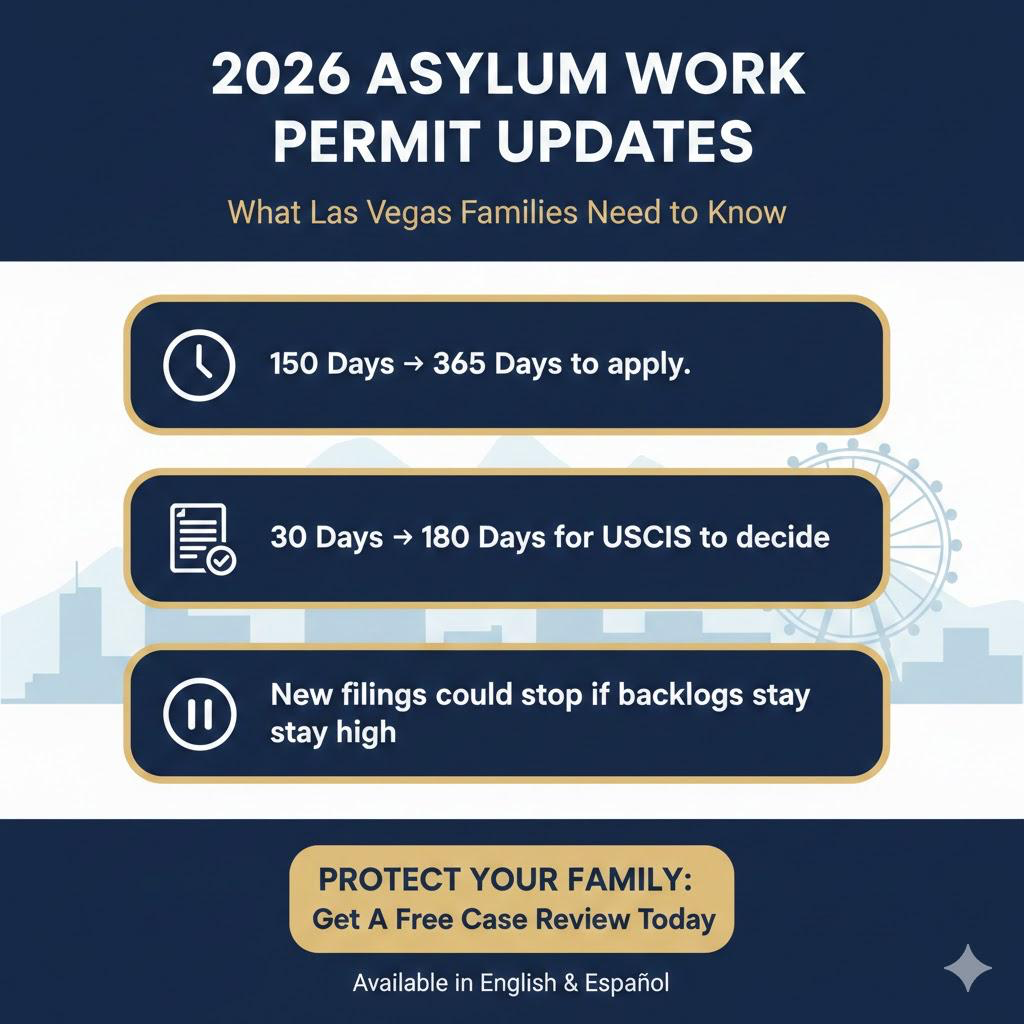
1) A longer wait to apply: 150 days → 365 days
Under the proposal, many asylum applicants would have to wait 365 days after USCIS receives a complete asylum application before they could even apply for an initial asylum EAD. This is a significant increase from the current 150-day waiting period.
2) A longer time for USCIS to decide: 30 days → 180 days
The proposal would give USCIS 180 days to decide on an initial asylum-based EAD application. By comparison, the current framework is generally understood as a 30-day EAD processing requirement.
3) A “pause” mechanism that could stop new filings
The proposed rule would allow USCIS to temporarily stop accepting initial asylum-based EAD applications when the average processing time for asylum applications exceeds 180 days. Public reports note that DHS’s own regulatory text acknowledges a pause could last “many years” given the current backlog. Some projections suggest it could take decades to reach the targets required to end such a pause.
4) New eligibility restrictions
The proposal would add new grounds to restrict asylum EAD eligibility, including:
- Late filing: Filing for asylum after the one-year deadline (with limited exceptions).
- Manner of entry: Disqualifying many migrants who crossed the U.S. border unlawfully unless they expressed fear of persecution within 48 hours of entry.
- Criminal history: Certain criminal-bar concerns could trigger an EAD denial.
5) Faster termination after an asylum denial
Under the proposal, an EAD would terminate immediately if an asylum officer denies the application. If an immigration judge denies the application, the EAD would terminate 30 days after denial unless a timely appeal is filed.
Is the rule in effect yet, and what happens next?
No—this is not final yet. DHS is accepting public comments on the proposal through April 24, 2026.
The proposal must go through this public comment period and be converted into a final rule before it can take effect. Even after comments close, agencies often revise language before issuing a final regulation.
Current as of February 2026: Policies and timelines can change quickly, so confirm updates with official sources and a licensed attorney.
What is a simple plan to stay protected?
You are the hero in this story. Your goal is to keep your family safe, informed, and ready to respond—without making decisions based on rumors.
- Step 1: Get clear on your timeline. Know exactly when your asylum case was filed and whether it is affirmative or defensive. This determines which rules apply to you.
- Step 2: Track credible updates. Stick to official sources or trusted legal organizations. Viral social media posts often spread misinformation during policy changes.
- Step 3: Talk to an attorney before you make a move. This proposal includes multiple “if/then” rules. A consultation can help you understand how these specific bars might affect your eligibility.
Not Sure If You’re Ready to Talk to a Lawyer Yet?
Get a Free Preliminary Immigration Case Review
Before committing to legal advice, this free review helps you see the landscape—how situations like yours are generally viewed, what processes and forms are commonly involved, and where cases often run into trouble.
It gives you the context and clarity to decide whether and when speaking with a lawyer makes sense.
- ✅ No legal advice.
- ✅ No pressure.
- ✅ Just a clear, high-level roadmap.
For informational purposes only. No attorney-client relationship is created.
Contacting the firm by phone, email, or website does not create an attorney-client relationship. Do not send confidential information until a written representation agreement is signed. The firm is licensed only where stated (e.g., Nevada and California).
Disclaimers
- No attorney-client relationship: Contacting the firm by phone, email, website form, or social media does not create an attorney-client relationship.
- Confidentiality warning: Do not post or send sensitive facts (names, A-numbers, court dates) through comments or unsecured forms.
- No guarantees: Immigration outcomes depend on the facts and the law at the time; nothing on this page promises a result.