TPS Ending February 3, 2026: Options for Las Vegas Haitian and Venezuelan Families
If your family in Las Vegas, Nevada relies on Temporary Protected Status (TPS), the phrase “TPS ending February 3, 2026” can feel like a countdown clock in your chest. Moreover, TPS is often what allows you to work, care for your kids, and keep your household stable in Clark County.
The idea of losing this protection can bring fear, confusion, and many unanswered questions. This isn’t just about forms. It’s about protecting your family’s future and avoiding painful surprises that could lead to job loss or immigration enforcement concerns.
Disclaimer (general information only)
This article provides general information about TPS terminations and possible immigration pathways. It does not constitute legal advice. Immigration law is complex, and every case is unique and depends on individual facts and circumstances. Additionally, reading this content does not create an attorney-client relationship.
What’s happening with TPS right now?
A Federal Register notice states that the designation of Haiti for TPS is terminated. The effective date is 11:59 p.m. local time on February 3, 2026. Community resources tracking TPS changes also report that Haiti TPS is ending on this date.
For Venezuela, the situation is different. Advocacy and community resources describe multiple TPS designations and terminations. Some people may maintain work authorization until October 2, 2026 based on specific EAD issuance and expiration details.
Important: Because TPS rules and litigation can change quickly, confirm your exact TPS category, dates, and documents using official updates and qualified legal help. Don’t rely on general timelines alone.
Who may be affected in Las Vegas and Henderson?
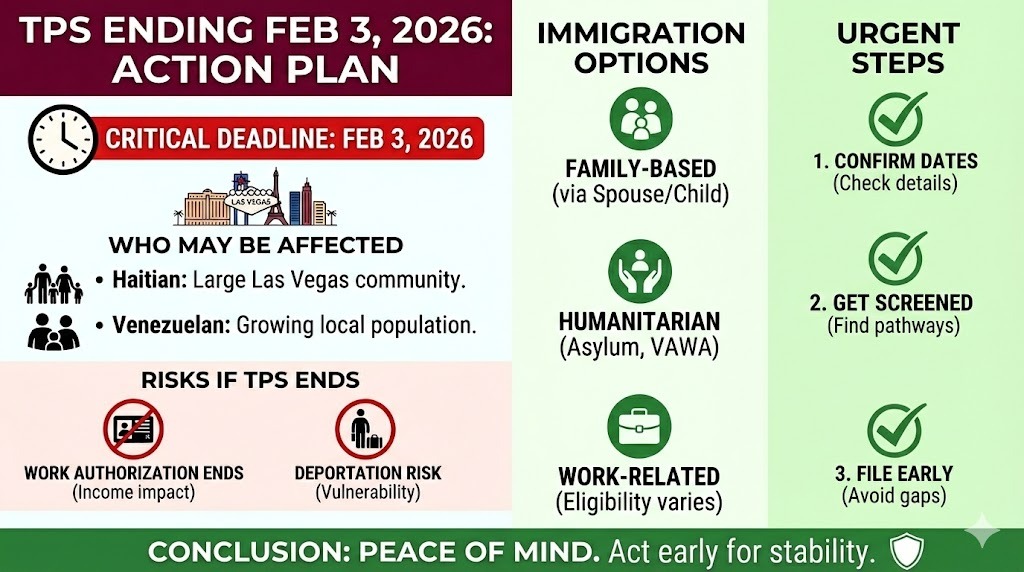
Families who have built their lives in Las Vegas and Henderson may be affected if a parent’s TPS ends and they have no other lawful status. Las Vegas has a documented Haitian community. Furthermore, demographic sources estimate 747 Haitians in Las Vegas and 2,014 in Nevada, with neighborhood clustering by ZIP code.
For Venezuelan families, the growth has been rapid. Pew Research estimates 1.2 million Hispanics of Venezuelan origin lived in the U.S. in 2024—a 119% increase since 2019. This growth helps explain why Las Vegas-area families are hearing more about Venezuelan TPS. However, local counts remain harder to pin down in a single public dataset.
What happens when TPS ends (work permits and deportation risk)?
TPS is temporary protection by definition. When it ends, a person may return to their prior immigration status (if they had one). Alternatively, they may have no lawful status moving forward.
For many families, the most immediate concern is employment authorization. When TPS-based work authorization ends, continuing to work may no longer be permitted unless another valid work authorization applies.
Importantly, it’s crucial to understand the “stakes” in a calm, realistic way. When TPS ends and someone has no other lawful status, they may become more vulnerable to enforcement. Additionally, they could be placed into removal (deportation) proceedings in some situations.
The safest approach is to explore lawful alternatives early—before the deadline. This way, you have options and time to prepare.
What immigration options may be available after TPS?
Different families qualify for different solutions. Some people may have no immediate option—so screening matters. Below are common pathways that may apply to some TPS holders.
Note: This is general education only. Eligibility depends on entry history, family relationships, victim protections, and other facts.
Family-based options (petitions and possible green card paths)
Some people may qualify through a U.S. citizen or lawful permanent resident family member. For example, a spouse or adult child could sponsor you. However, eligibility can depend on how the person entered the U.S. and whether other bars apply.
Because these details are fact-specific, review them carefully. Don’t assume a family petition automatically fixes everything.
Humanitarian protections (asylum or victim-based options)
Some people may explore asylum if they fear returning to their home country due to persecution on a protected ground. However, asylum has deadlines, exceptions, and complex evidentiary rules.
Other people may qualify for protections based on being a victim of certain crimes or abuse. For instance, U visa or VAWA-related protections may apply, depending on facts and documentation.
Work-related options (in some cases)
Some families may have employment-based possibilities. However, timelines, eligibility requirements, and sponsorship rules vary widely. If a work option is on the table, starting early matters. Many work-based processes take time and careful planning.
What urgent steps can you take before February 3, 2026?
When you feel overwhelmed, a simple plan creates clarity and momentum. Here’s a practical 3-step plan to help you move forward in Las Vegas and Clark County before the Haiti TPS deadline.
Step 1: Confirm your exact TPS dates and documents
Rules and deadlines can depend on your country designation. Additionally, they depend on the specific notices tied to your documents. Confirm your dates (and any automatic extensions) using reliable sources.
Step 2: Get screened for alternative pathways now (don't assume)
Many families delay because they think they have no option. Or they think a family petition fixes everything. The real answer depends on entry history, prior filings, and other facts. Therefore, screening is essential.
Step 3: File eligible cases early enough to avoid gaps
Even when a person qualifies for another option, timing matters for work authorization. Additionally, timing affects stability and risk minimization. Early filing may help reduce last-minute emergencies.
Common mistakes to avoid
Waiting until the final weeks often reduces choices and increases stress for the whole family. This is especially true when kids, jobs, and housing depend on stable income in Las Vegas.
How Immigration Legal Consulting (ILC) can guide you
You deserve clear information in plain language—especially when deadlines are this serious. Immigration Legal Consulting (ILC) supports families with immigration-only services.
The team can help you understand:
What the TPS deadline means for your status
What pathways may be available
What a safe timeline could look like for your next step
These conversations happen without promises or guarantees—just honest, practical guidance.
If you’ve also been worried about enforcement or confusing “quick exit” offers, reviewing general risks and options can help. You can avoid decisions made under pressure.
Related resources
Conclusion
If TPS is ending on February 3, 2026 for Haiti, the best time to look for alternatives is before you’re forced into a last-minute decision. Moreover, with a clear plan, many families in Las Vegas and Henderson can move from fear to action.
How? By confirming dates, screening for options, and starting the process early. This protects your work and family stability. The goal is peace of mind: knowing you have a strategy, understanding your realistic options, and avoiding preventable mistakes that can create separation or long-term immigration consequences.
Not Sure If You’re Ready to Talk to a Lawyer Yet?
Get a Free Preliminary Immigration Case Review
Before committing to legal advice, this free review helps you see the landscape—how situations like yours are generally viewed, what processes and forms are commonly involved, and where cases often run into trouble.
It gives you the context and clarity to decide whether and when speaking with a lawyer makes sense.
- ✅ No legal advice.
- ✅ No pressure.
- ✅ Just a clear, high-level roadmap.
For informational purposes only. No attorney-client relationship is created.
Contacting the firm by phone, email, or website does not create an attorney-client relationship. Do not send confidential information until a written representation agreement is signed. The firm is licensed only where stated (e.g., Nevada and California).